
“I’m Just Not Coordinated” — Why Strength Training Changed How I Move (and How I Feel in My Body)
For most of my life, I carried around a quiet belief that felt like a fact:
“I’m not coordinated.”
“I’ve got two left feet.”
“I’m not graceful — I’m a klutz.”
If you’ve ever thought something like that about yourself, you’re not alone. I held onto those ideas well into adulthood — even after I started my fitness journey.
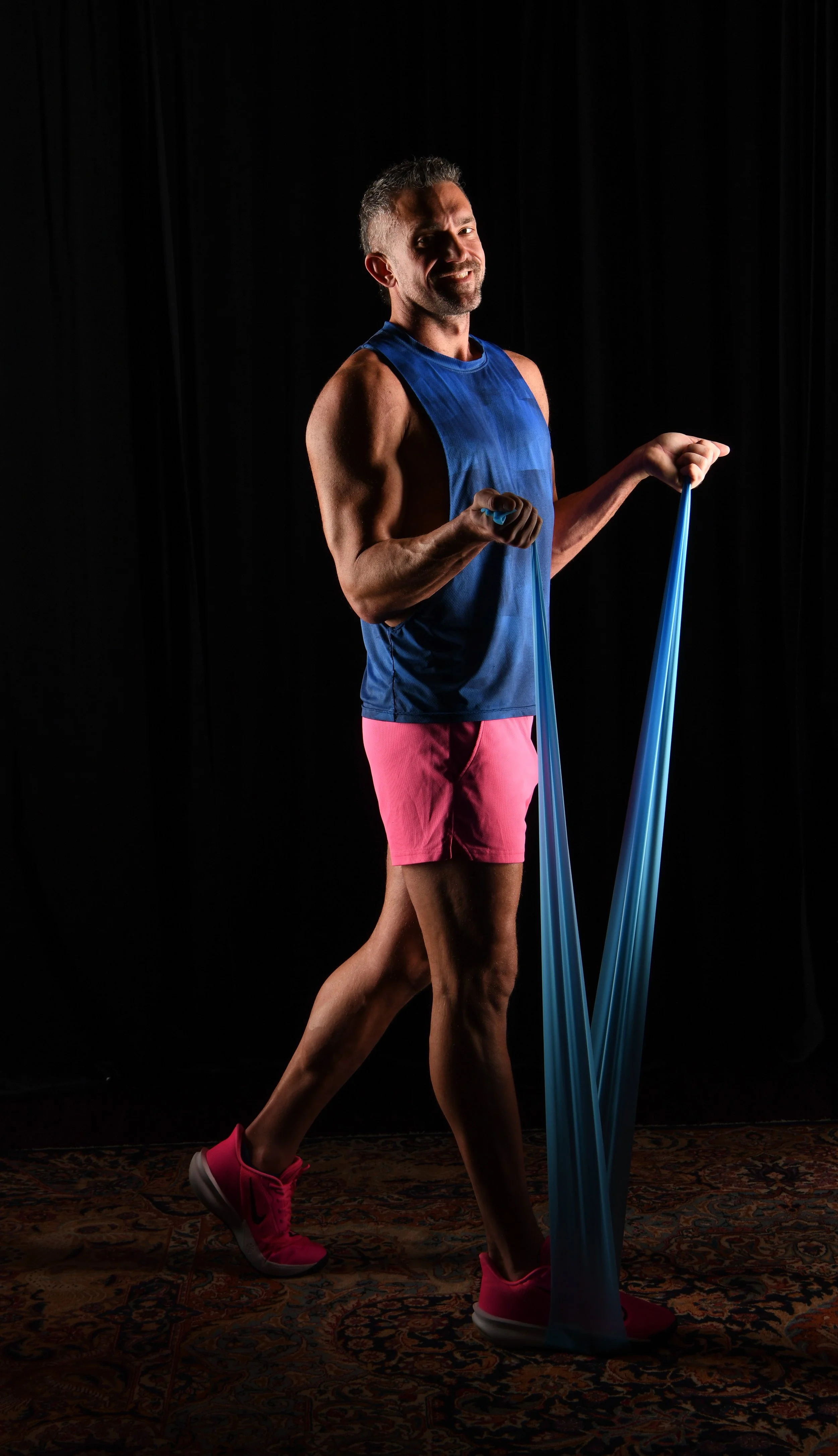
The suggestion to “Step on the band with your right foot and twist at your hips while lifting your left heel off the ground while curling the band up” would have sent old me into a tailspin of confusion!
When “Uncoordinated” Becomes Part of Your Identity
Growing up, I always felt awkward in my body. Dancing felt embarrassing. Following movement cues felt confusing. Anything that required rhythm, flow, or grace made me feel like I was performing a bad parody of a human being.
Even when I first started going out and dancing as an adult, I was convinced I looked ridiculous — like I was just flailing around and having fun, not actually moving well. Then one night, a go-go dancer casually called me out and said I had nice moves.
I remember being genuinely shocked.
Not because I suddenly became coordinated overnight — but because my internal story about my body didn’t match what someone else was seeing.
And still… that old belief stuck around.
Carrying Old Beliefs Into a New Body
As I began working out more consistently, losing weight, and building muscle, I noticed something strange:
My body was changing, but my self-image wasn’t always keeping up.
I still told myself I wasn’t coordinated.
I still avoided things like yoga or complex movement patterns because I assumed I wouldn’t “get it.”
I still felt nervous when asked to follow physical cues.
That showed up again recently during a professional photo shoot.
I remember thinking, “There’s no way I’m going to be able to follow posing directions.”
Instructions like “turn your body to the right and place your right hand over your left knee” used to feel overwhelming and disorienting to me.
But something unexpected happened.
I followed every cue with ease.
I felt connected, grounded, and present in my body.
Instead of confusion, there was clarity.
And I realized:
My coordination had changed — even though I never trained it directly.
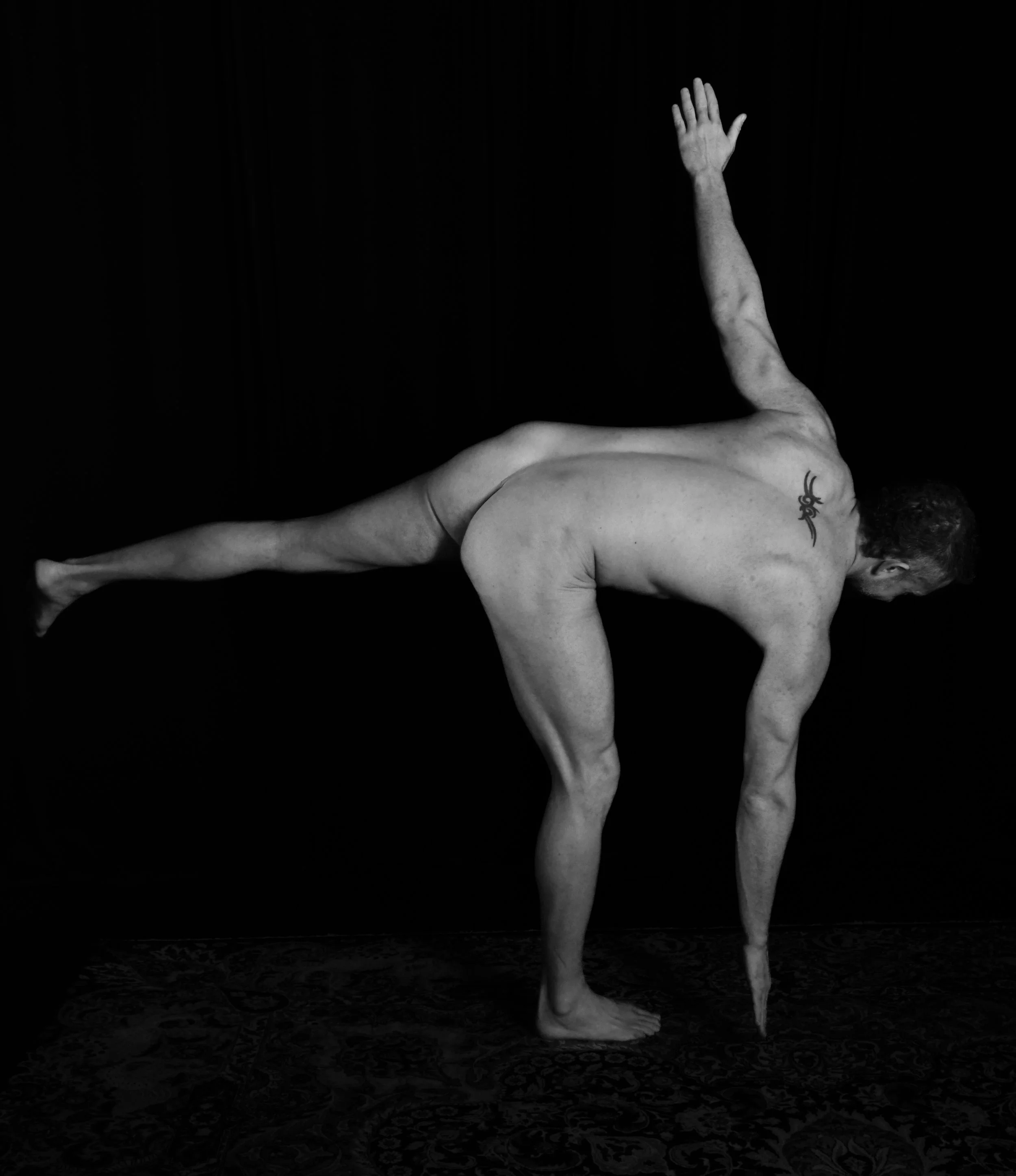
I had no idea my body could move this way until I pushed past the negative thinking and old rules and gave it a shot.
What Strength Training Actually Does to Coordination
A lot of people think coordination is something you either have or you don’t — like musical talent or flexibility.
But research shows coordination is a learned skill, and resistance training plays a huge role in developing it.
Here’s why.
Strength Training Improves the Brain–Body Connection
When you lift weights, your nervous system learns how to:
recruit muscles more efficiently
time movements better
reduce unnecessary tension
In the early stages of strength training, most progress comes not from bigger muscles, but from better communication between the brain and the body.
That improved communication leads to smoother, more controlled movement.
Proprioception Gets Stronger
Proprioception is your body’s ability to sense where it is in space — essentially your internal GPS.
Resistance training challenges:
joint stability
balance
full ranges of motion
Over time, this sharpens your body awareness, making it easier to:
follow choreography
transition between positions
respond to verbal movement cues
feel confident trying new movements
This is one reason people often feel “less clumsy” as they get stronger.
Motor Learning Improves — Even Without Dance or Yoga
Motor learning is your ability to learn and refine new movements.
Strength training improves motor learning by:
increasing neural efficiency
building movement vocabulary
reinforcing patterns through repetition
That’s why following cues during my photo shoot felt natural — my body had learned how to listen, respond, and adjust.
Not because I practiced posing.
But because I practiced moving with intention.
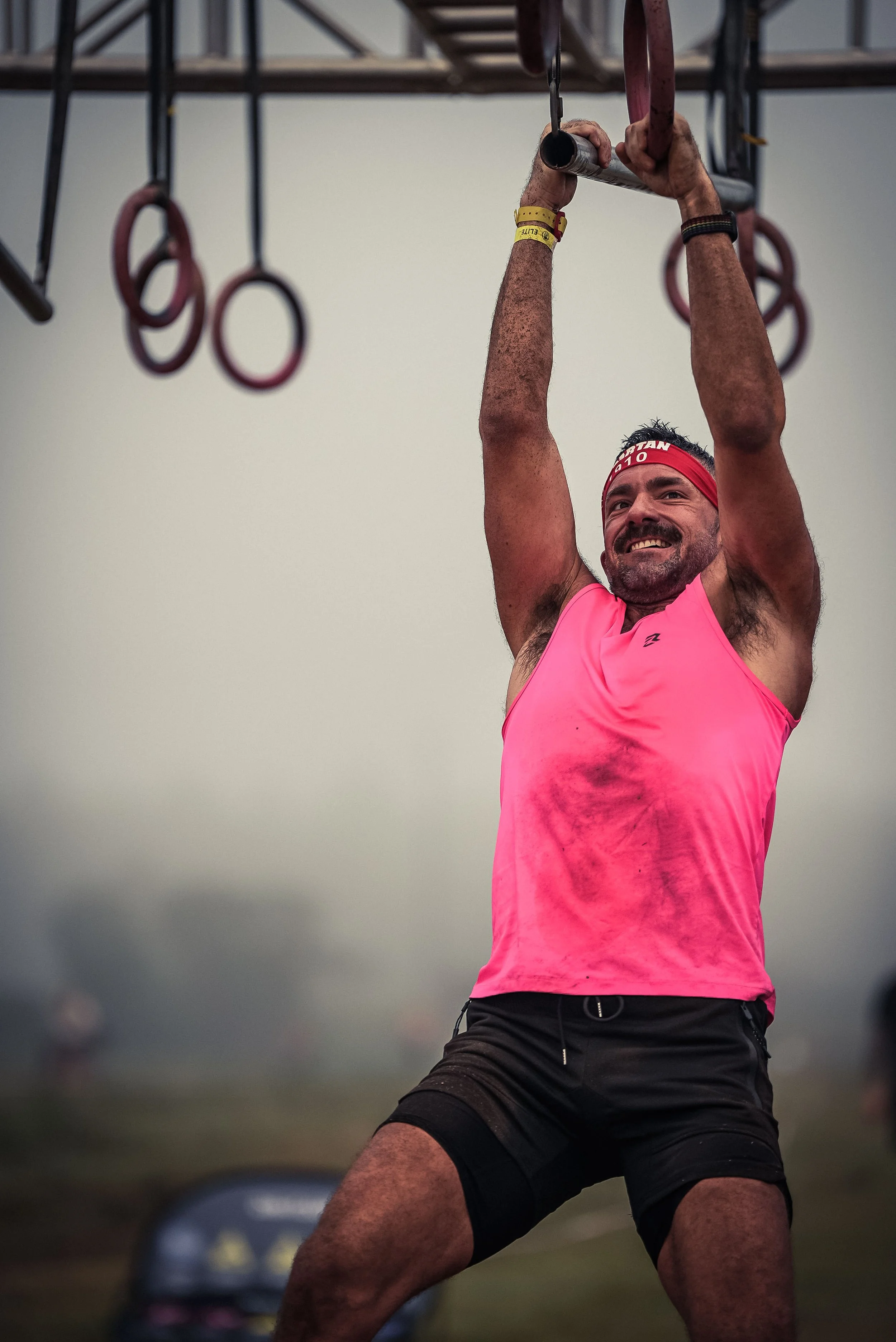
Swinging from a ring to a bar and back to more rings? Even a year ago I fell flat on my face in this challenge, but through training and improving my mind-muscle connection, this past Spartan race I succeeded at completing this challenge!
Why So Many Adults Believe They’re “Uncoordinated”
When clients tell me they’re not coordinated, it’s almost never because they lack ability.
It’s usually because of:
early negative experiences in gym class
being picked last for sports
feeling self-conscious or unsafe in movement spaces
lacking strength or stability earlier in life
Those experiences turn into identity statements — and identity statements are hard to shake.
But they’re not permanent truths.
The Confidence Shift That Comes With Strength
One of the most powerful things strength training gave me wasn’t visible muscle — it was trust.
Trust that my body can:
follow directions
adapt
learn
move with control
That trust quiets the nervous system.
And when the nervous system feels safe, coordination improves naturally.
The Takeaway I Wish More People Knew
If you’ve ever told yourself:
“I’m not coordinated”
“I can’t dance”
“I’m just awkward”
There’s a good chance it’s not a flaw — it’s a skill you haven’t had the chance to develop yet.
You don’t need to start with dance, yoga, or complex choreography.
You don’t need to be graceful to begin.
Strength training builds coordination indirectly — by teaching your body how to feel stable, capable, and connected.
And sometimes, the biggest transformation isn’t how your body looks…
It’s how confidently you can inhabit it.
